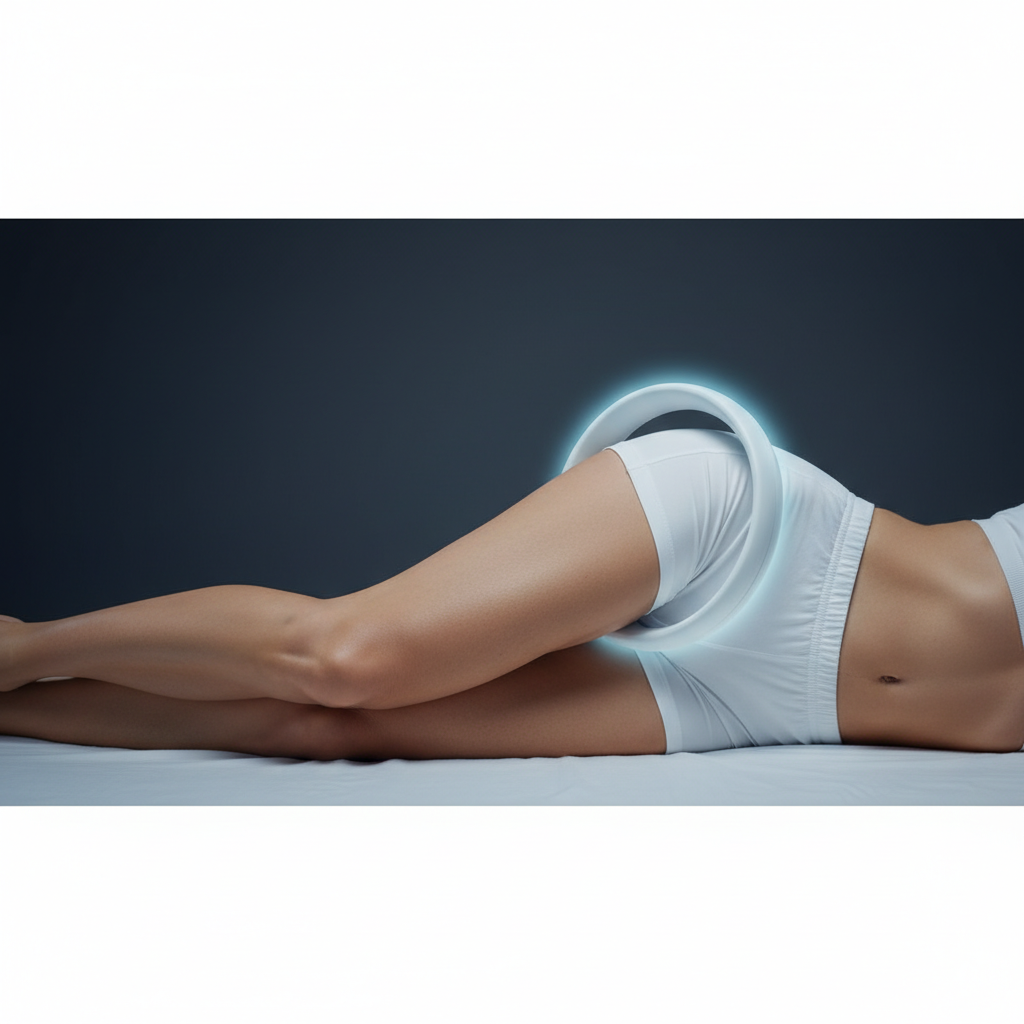
In 40 seconds
Hip osteoarthritis affects roughly 10% of UK adults over 60 and is the second most common reason for joint replacement on the NHS. PEMF therapy reduces inflammation in the hip joint capsule, supports cartilage cell function, and improves microcirculation. While direct hip OA evidence is smaller than for knee OA, the underlying mechanism is well documented and clinical experience is consistent. Typical protocol: 2 sessions per week for 8 weeks, often using a combination of localised hip applicator and full-body mat to reach the deep joint structure.
Quick facts
- Affects: ~10% of adults 60+, ~25% of adults 75+
- NHS surgery wait: 12–24+ months in many regions
- PEMF role: Symptom relief + delay surgery + post-op recovery
- Sessions: 2× per week for 8 weeks
- Penetration: Hip is deep — full-body mats work better than small applicators
- Pairs with: Glute strengthening, weight management, GP-led pain management
Why hip OA is harder to treat than knee OA
The hip joint sits deeper in the body than the knee, surrounded by thick layers of muscle and fascia. Topical and surface-based therapies struggle to reach it. Surgical options carry higher risk and longer recovery. The pain pattern is also more variable — referred pain into the groin, thigh, or buttock can confuse diagnosis.
How PEMF reaches and helps the hip
Magnetic fields pass through skin, fat, muscle and fascia without resistance — which is why PEMF reaches the deep hip joint where surface treatments can't. The mechanism mirrors knee OA: PEMF stimulates voltage-gated calcium channels in chondrocytes, supports collagen and proteoglycan synthesis, reduces inflammatory cytokines, and improves microcirculation in the synovium.
Clinical-grade PEMF systems use full-body mats that ensure adequate field strength reaches the hip — small home devices generally don't have the penetration depth needed.
The evidence
Direct hip OA RCTs are fewer than knee OA, but the broader OA evidence base — including the 2024 systematic review of 1,197 patients — strongly supports PEMF for joint OA generally. The mechanism does not change between joints; only the access does.
Source: PMC11012419
Typical UK protocol
| Phase | Frequency | Duration | What happens |
|---|---|---|---|
| Loading | 2× per week | Weeks 1–4 | Full-body mat (40 min) + localised hip applicator (15 min) |
| Consolidation | 2× per week | Weeks 5–8 | Same protocol + glute strengthening |
| Maintenance | 1× per week or fortnightly | Ongoing | Top-ups |
Alongside the rest of your hip care
- Glute strengthening — the most overlooked element of hip OA care
- Weight management — every kilogram lost is multiple kilograms off the hip with each step
- Walking, swimming, cycling — keep moving, keep the joint nourished
- GP-led pain management — review medications regularly
Contraindications
Hard exclusions — do not have PEMF if any apply:
- Pacemaker, implantable cardioverter-defibrillator (ICD), or any cardiac electronic device
- Cochlear implant or other implanted electronic hearing device
- Spinal cord stimulator, deep-brain stimulator, vagus nerve stimulator
- Intrathecal pump or implanted drug pump
- Insulin pump (continuous glucose monitors are usually fine — confirm with the clinic)
- Active infection at the treatment site
- Pregnancy — when treatment would be over the abdomen, lumbar spine, or pelvis
Discuss with your GP or specialist before booking if any apply:
- Active malignancy or recent cancer history (oncologist clearance required)
- History of seizures or epilepsy
- Multiple sclerosis or other neurological condition under specialist care
- Anticoagulant therapy (PEMF itself does not thin blood, but bruising risk if local circulation is already compromised)
- Children under 14 (most UK clinics will not treat under-18s without paediatric specialist input)
- Recent surgery within the last 14 days at the treatment site (confirm with surgeon)
NOT contraindications — these are commonly misunderstood:
- Plates, rods, screws and other passive metal orthopaedic hardware
- Dental implants and dental crowns
- Joint replacements (hip, knee, shoulder)
- IUDs (copper or hormonal)
- Tattoos and piercings (jewellery should be removed for the session)
Specific to this condition: Active hip joint infection is a hard exclusion until treated.
Frequently asked questions
Does PEMF work for hip osteoarthritis?
Evidence specific to hip OA is smaller than for knee OA, but the mechanism is the same — reduced cartilage cell stress, reduced inflammation, improved microcirculation in the joint. Most clinics report similar response rates to knee OA: 60–70% of patients see meaningful pain reduction by week 6.
Can PEMF delay hip replacement surgery?
Many UK patients on the long NHS waiting list for hip replacement use PEMF to manage symptoms while they wait. Some find enough relief to delay surgery; others go ahead but recover faster. PEMF doesn't reverse advanced joint damage.
Will it work if my hip is bone-on-bone?
Even in advanced (Kellgren-Lawrence grade 4) hip OA, PEMF can reduce pain and improve function — though it won't restore cartilage that's no longer there. Realistic expectation: better quality of life, not a structural cure.
Is PEMF safe after a hip replacement?
Yes — and surgeons frequently approve it post-op. PEMF supports bone-implant integration and reduces post-op swelling. Replacement implants are not a contraindication.
How is hip OA different from greater trochanteric pain?
Greater trochanteric pain syndrome (gluteal tendinopathy) is pain on the outside of the hip, not from the joint itself. PEMF helps both, but the protocols differ slightly.
How many sessions for hip OA?
Typical UK protocol: 2 sessions per week for 8 weeks, then maintenance. Hip joints sit deep in the body so localised PEMF is usually paired with a full-body mat for tissue penetration.
Looking for a PEMF clinic near you?
We list every credible PEMF therapy provider in the UK so you can find one near home.