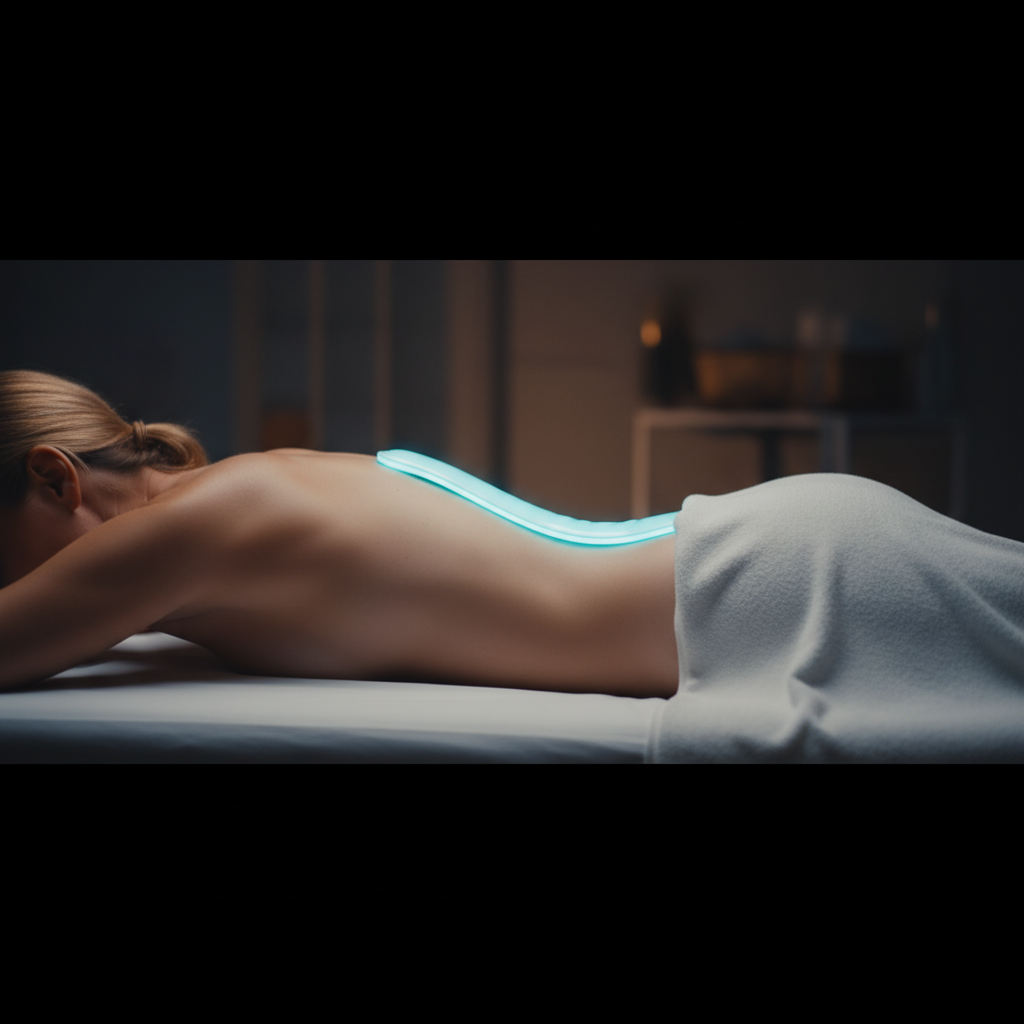
In 40 seconds
Lower back pain is the indication with the largest positive consumer-grade PEMF evidence base. The Kull 2023 systematic review (9 RCTs / n=420 / mean PEDro 7.2) and Sun 2022 meta-analysis (14 trials / n=618) both found statistically significant pain and function improvements when PEMF is added to conventional physiotherapy in chronic low back pain. But the UK headline is this: NICE NG59 (low back pain and sciatica in over-16s) does NOT include PEMF in its recommendations, and explicitly recommends AGAINST related passive electrotherapies (TENS, PENS, interferential, ultrasound). NHS England does not commission PEMF for back pain. The most important negative trial is Salfinger/Hug 2015 (n=94) — therapeutic NMR for lumbar disc herniation with radicular syndrome "did not meet MCID criteria," directly contradicting common industry "disc repair" marketing. Three device classes must be distinguished: consumer mats (modest adjunct evidence), high-intensity clinic PEMF, and FDA-cleared spine fusion bone-growth stimulators (a real surgical adjunct — NOT chronic pain therapy).
Quick facts
- Kull 2023 systematic review: 9 RCTs / n=420 / PEDro 7.2 / significant pain + function benefit
- Sun 2022 meta-analysis: 14 trials / n=618 / significant chronic LBP benefit
- NICE NG59: Does NOT include PEMF in recommendations
- NHS commissioning: Not commissioned for back pain
- Important null trial: Salfinger/Hug 2015 NMR for lumbar disc herniation — did not meet MCID
- Strongest sub-type: Chronic non-specific low back pain (adjunct to physio)
- Weakest sub-type: Acute LBP, pregnancy-related LBP (universally excluded), facet-specific
- FDA-cleared spine bone growth stim: Adjunct to lumbar fusion surgery — NOT chronic pain therapy
- Critical UK rule: PEMF as adjunct alongside NICE NG59 pathway — NEVER as substitute
Three device classes — keep them separate
The PEMF-for-back-pain conversation conflates three quite different things. The page below separates them.
Consumer PEMF mats
Low-intensity (microtesla to a few millitesla) home wellness devices. This is where the Kull 2023 and Sun 2022 meta-analyses sit. MHRA Class IIa wellness device — not equivalent to NICE recommendation. Modest adjunct evidence for chronic non-specific LBP.
High-intensity clinic PEMF
Higher-intensity clinic-based devices (e.g. some NMR/MBST devices). Marketed as "regenerative" — the strongest negative trial in this space is Salfinger/Hug 2015 in disc herniation (null on MCID). MHRA Class IIa typically. Marketing claims often outpace evidence.
FDA-cleared spine fusion bone-growth stimulators
A different category entirely. Implantable or external low-intensity bone-growth stimulators used as adjuncts to spinal fusion surgery to improve bone healing. FDA-cleared for that specific surgical indication. NOT a chronic-pain therapy. Often confused in marketing.
Evidence at a glance
| Study | Year | Population / n | Intervention | Result | Source |
|---|---|---|---|---|---|
| Lee et al. | 2006 | Chronic LBP / n=40 | Low-freq PEMF, 3 weeks | Significant pain and disability reduction vs sham | PMID 16526097 |
| Omar et al. | 2012 | Discogenic radiculopathy / n=40 | PEMF + physio, 2 weeks | Significant pain reduction + SSEP improvement | PMID 22302487 |
| Andrade et al. (SR) | 2016 | Multi-RCT SR | PEMF for chronic LBP | Significant pain and function benefit when added to physio | BMC Musculoskelet Disord |
| Harper et al. (pilot) | 2014 | FBSS / n=40 | Home PEMF | 33% response overall; higher in post-discectomy | Pain Pract |
| Salfinger / Hug et al. | 2015 | Lumbar disc herniation w/ radiculopathy / n=94 | Therapeutic NMR vs sham | NULL — did NOT meet MCID criteria for pain or function | Eur Spine J |
| Sun et al. (meta) | 2022 | 14 trials / n=618 | PEMF chronic LBP | Significant pain VAS reduction + ODI improvement | PubMed |
| Kull et al. (SR) | 2023 | 9 RCTs / n=420 / PEDro 7.2 | PEMF chronic LBP adjunct | Significant pain + function benefit; quality acceptable | Systematic Review |
| NICE NG59 | 2016 (updated) | Guideline | n/a | Recommends exercise, manual therapy, CBT, NSAIDs. PEMF NOT included; TENS/PENS/IFT/ultrasound NOT recommended. | nice.org.uk/ng59 |
The honest read
PEMF for chronic non-specific low back pain has more positive meta-analysis evidence than for any other condition we cover. AND NICE NG59 still doesn't include it. Both can be true. The published trials show modest adjunctive benefit alongside physiotherapy; the NICE methodology is more conservative about strength of evidence. UK use should be framed as personal-choice adjunct, not core treatment.
Sub-type evidence
Chronic non-specific LBP
The strongest evidence sub-type. Kull 2023 and Sun 2022 meta-analyses cover this population. Effects are modest, adjunctive, and require ongoing use. Maintenance protocols vary by trial.
Discogenic radiculopathy / sciatica
Omar 2012 (n=40) showed PEMF + physio significantly reduced pain and improved SSEP. Read the sciatica page →
Disc herniation
Salfinger/Hug 2015 (n=94) is the most important negative trial — therapeutic NMR did not meet MCID for pain or function. Marketing claims of "disc repair" via PEMF are not supported by this trial. Read the disc herniation page →
Failed back surgery syndrome (FBSS)
Harper 2014 pilot showed 33% response overall, higher in post-discectomy subgroup. Small evidence base.
Acute low back pain
Limited evidence. NICE NG59 advice for acute LBP is self-management, reassurance, NSAIDs short-term. PEMF not recommended.
Occupational back pain (builder, driver, nurse, etc.)
Driver, builder, nurse, dentist back pain — common in working populations. PEMF as adjunct alongside ergonomic review and graded exercise is reasonable. Read the occupational back pain page →
Pregnancy-related back pain
Universally excluded from PEMF trials. Pregnancy is a contraindication to PEMF over the lumbar spine or pelvis. Do not use.
Older adults
PEMF over the lumbar spine has acceptable safety in the absence of pacemakers, ICDs, spinal cord stimulators, deep brain stimulators. Falls risk from floor-based mats applies.
UK regulatory position — NICE NG59 is the central document
MHRA classifies consumer PEMF mats as Class IIa wellness devices. Class IIa does not equate to NICE recommendation. ASA enforces CAP Code Section 12 — UK PEMF marketing must not exceed evidence-supported claims.
NHS England does not commission PEMF for back pain. NHS pathway for chronic LBP follows NICE NG59.
FDA-cleared bone growth stimulators (for use as adjuncts to spinal fusion surgery) are a separate device class — not relevant to consumer chronic-pain marketing.
Safety
Implanted devices
Pacemakers, ICDs, cochlear implants, spinal cord stimulators, deep brain stimulators, vagus nerve stimulators — absolute exclusions for PEMF over the spine.
Pregnancy
PEMF over the lumbar spine or pelvis during pregnancy not recommended. Universally excluded from trials.
Active malignancy
Active malignancy or recent cancer history requires oncologist clearance before any PEMF use.
Active infection
Discitis, vertebral osteomyelitis, paraspinal abscess — exclusions until resolved.
Red-flag back pain
Saddle anaesthesia, bowel/bladder dysfunction, unexplained weight loss, fever, night pain in older adult — see a doctor urgently, not a PEMF clinic.
Anticoagulation
PEMF does not affect coagulation directly. Bruising risk on a mat is minimal.
Practical guidance for UK adults
- Rule out red flags first. Saddle anaesthesia, sphincter dysfunction, unexplained weight loss, fever, night pain — see a GP urgently.
- Follow NICE NG59 first. Structured exercise programme (this is the #1 evidence-based intervention), manual therapy within an exercise package, CBT for chronic LBP, short-term NSAIDs.
- If considering PEMF as adjunct, frame it as such — alongside, not instead of, the NICE pathway. The Kull 2023 / Sun 2022 evidence is for PEMF + physio, not PEMF alone.
- Set a 4-8 week trial with measurement. Baseline + endpoint pain VAS and Oswestry Disability Index. Stop if no clear improvement.
- Don't accept "disc repair" claims. Salfinger/Hug 2015 directly contradicts this.
- For sciatica/radiculopathy: follow the sciatica-specific NICE pathway. See our sciatica page.
- Surgical bone-growth stimulators are different. If a surgeon recommends one as adjunct to lumbar fusion, that is a separate evidence base — not relevant to chronic-pain marketing.
Frequently asked questions
Does PEMF actually work for chronic back pain?
The Kull 2023 systematic review (9 RCTs / n=420) and Sun 2022 meta-analysis (14 trials / n=618) both found significant pain and function benefit when PEMF is added to physiotherapy in chronic non-specific low back pain. Effects are modest. NICE NG59 still does not include it.
Why doesn't NICE recommend PEMF for back pain?
NICE NG59 uses conservative evidence-grading methodology. The published trials are mostly small with heterogeneous protocols. NICE recommends against the broader category of passive electrotherapies (TENS, PENS, IFT, ultrasound) as routine — PEMF sits outside the recommended interventions.
Will a PEMF mat fix my disc herniation?
No. Salfinger/Hug 2015 (n=94) tested therapeutic NMR for lumbar disc herniation with radicular syndrome and did not meet MCID criteria for pain or function. "Disc repair" marketing claims for PEMF are not evidence-supported.
Is PEMF safe over the lower back?
Yes — in the absence of pacemakers, ICDs, spinal cord stimulators, DBS, vagus nerve stimulators. Pregnancy is a contraindication. Active malignancy needs oncologist clearance.
Can a PEMF mat replace exercise for back pain?
No. Structured exercise is the #1 NICE-recommended intervention for chronic LBP. PEMF is adjunctive at best. The trials that worked combined PEMF with physiotherapy.
How long should I trial a PEMF mat?
4-8 weeks with objective measurement (pain VAS, Oswestry Disability Index at baseline and endpoint). Stop if no clinically meaningful improvement.
Is the bone-growth stimulator my surgeon recommended the same thing?
No. FDA-cleared spine fusion bone-growth stimulators are a different device class used as surgical adjuncts. Not a chronic-pain therapy. Don't conflate.
What about MBST therapy?
MBST is high-intensity clinic PEMF. Marketing claims have been challenged by ASA. The Salfinger/Hug 2015 NMR trial is the most relevant negative evidence for that category.
Does PEMF work for sciatica?
Omar 2012 (n=40) showed PEMF + physio improved pain and SSEP in discogenic radiculopathy. Standard sciatica pathway (NICE NG59) leads.
Will it help my driver's back pain from sitting all day?
Occupational back pain (driver, builder, nurse) responds to ergonomic review, graded exercise, posture and core conditioning. PEMF as adjunct is reasonable but not a substitute.
Can a UK PEMF clinic claim to treat back pain?
Cautiously. ASA Section 12 binds clinics — "may help" wording is generally acceptable; "treats" or "cures" can be challenged. Ask for the specific claim in writing.
Is PEMF safer than long-term NSAIDs for chronic back pain?
Different safety profiles. NSAIDs have GI, renal and cardiovascular risks with long-term use; PEMF has fewer systemic risks but doesn't replace medical management. Discuss with GP.
Can I use PEMF if I've had spinal surgery?
Generally yes after wound healing (~14 days minimum) and confirmation no spinal cord stimulator was implanted. Discuss with the surgeon.
Is high-intensity clinic PEMF better than a home mat?
No clear comparative trials. Both have evidence in chronic LBP; both are MHRA Class IIa; neither holds NICE recommendation. Clinic costs are higher.
What about TENS — does NICE recommend that?
No. NICE NG59 specifically recommends against routine TENS for LBP. The category PEMF sits within (passive electrotherapy) has limited NICE support.
Should I see a chiropractor or use PEMF?
Chiropractic / manual therapy is NICE-recommended within an exercise package. PEMF is not in the NICE pathway. Manual therapy + exercise is the more evidence-based path.
Does PEMF help fibromyalgia-related back pain?
Some small evidence in fibromyalgia generally. Separate from the chronic-LBP trial base. See our fibromyalgia page.
Can PEMF help post-surgical back pain?
Harper 2014 pilot (n=40) showed 33% response in FBSS overall, higher in post-discectomy. Small evidence base. See post-surgical recovery page.
Will a PEMF mat help my pregnancy back pain?
No. PEMF over the lumbar spine/pelvis during pregnancy is contraindicated and universally excluded from trials. Use pregnancy-safe physiotherapy and standard analgesia.
How does PEMF compare to exercise for chronic back pain?
Exercise has much larger effect sizes and is NICE-recommended first-line. PEMF is at best a modest adjunct.
Related pages
Sources
- Kull et al. PEMF for chronic low back pain: systematic review. 2023. (9 RCTs / n=420 / PEDro 7.2)
- Sun et al. PEMF for chronic LBP: meta-analysis. 2022. (14 trials / n=618)
- Andrade et al. PEMF for chronic LBP: systematic review. BMC Musculoskelet Disord, 2016.
- Omar et al. PEMF + physio for discogenic radiculopathy. 2012. PMID 22302487.
- Lee et al. Low-frequency PEMF for chronic LBP. 2006. PMID 16526097.
- Harper et al. Home PEMF for FBSS pilot. Pain Pract, 2014.
- Salfinger / Hug et al. Therapeutic NMR for lumbar disc herniation with radiculopathy: RCT. Eur Spine J, 2015. (n=94, NULL on MCID)
- NICE. NG59 Low back pain and sciatica in over-16s. 2016 (updated). nice.org.uk/guidance/ng59
- Lefaucheur JP, et al. rTMS guidelines update — chronic neuropathic pain Level A. 2020. PMID 31901449.
- Foster NE, et al. Prevention and treatment of low back pain. Lancet, 2018.
Looking for a PEMF clinic in the UK?
We list every credible PEMF therapy provider in the UK. NICE NG59 does not include PEMF for back pain — frame any consumer purchase as adjunct, not core treatment.