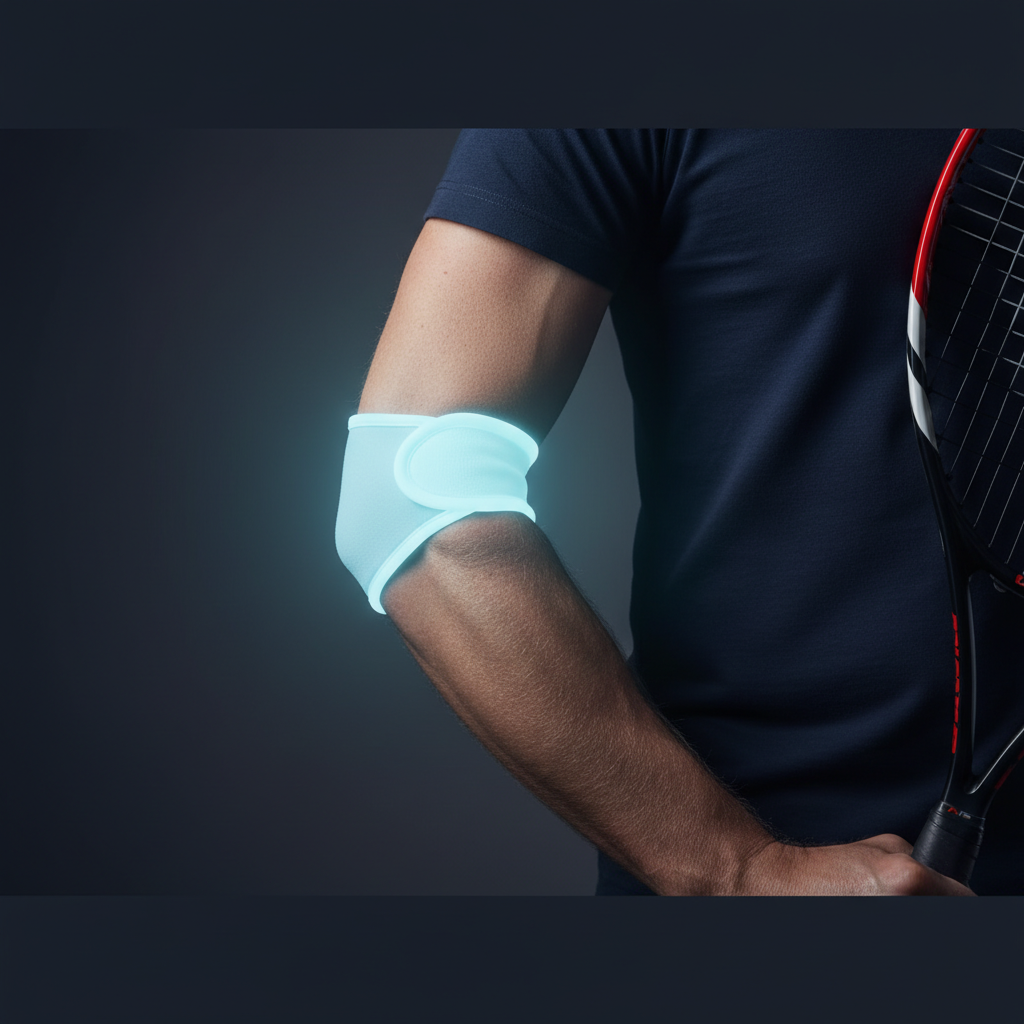
In 40 seconds
Tendinopathy is a degenerative condition, not just inflammation. PEMF therapy reduces pain and supports tenocyte (tendon cell) repair, particularly when combined with eccentric loading exercise. RCTs in lateral epicondylitis (tennis elbow) report meaningful pain reduction and grip-strength improvement after 4–6 weeks of treatment. Unlike steroid injections, PEMF has no evidence of weakening tendon tissue long-term — making it a preferred option for chronic cases.
Quick facts
- Affects: Tennis elbow, golfer's elbow, Achilles, patellar tendon, rotator cuff, gluteal tendons
- Standard care: Eccentric loading exercise + activity modification
- PEMF role: Reduces tendon inflammation, accelerates cellular repair
- Sessions: Typically 2–3× per week for 4–6 weeks
- Best paired with: Physiotherapy + progressive loading
- Vs steroid injection: No evidence of long-term tendon weakening
Why tendons heal so slowly
Tendons have notoriously poor blood supply. They are dense, ordered structures of collagen with relatively few resident cells (tenocytes). When tendon tissue is damaged — through repetitive overload, ageing, or mechanical injury — the repair process is slow and often incomplete.
Modern research has shifted the language from "tendinitis" (suggesting acute inflammation) to "tendinopathy" (recognising the condition is largely degenerative, with disorganised collagen and failed healing). Treatments that simply suppress inflammation — like NSAIDs and steroid injections — can mask symptoms but may not improve underlying tissue quality, and in some cases worsen it.
How PEMF helps a damaged tendon
PEMF pulses pass cleanly through tendon, fascia, and surrounding soft tissue. The induced micro-currents:
- Stimulate tenocytes to produce more collagen
- Increase microcirculation to under-perfused tendon tissue
- Reduce IL-1β and TNF-α (inflammatory cytokines)
- Support mitochondrial ATP production in cells doing the repair work
- Promote organised collagen alignment during remodelling
This is mechanism that aligns with the modern understanding of tendinopathy — it supports the failed-healing biology rather than just dampening symptoms.
The evidence
Multiple randomised controlled trials in lateral epicondylitis (tennis elbow) report PEMF reduces pain and improves grip strength compared to placebo. The 2025 multi-centre RCT in Pain and Therapy covered tendon and soft-tissue pain populations specifically, confirming efficacy and safety.
Source: Pain and Therapy 2025
Animal and cell-culture studies show PEMF directly stimulates tenocyte proliferation and collagen synthesis — providing a clear biological rationale for the clinical findings.
Typical UK protocol
| Phase | Frequency | Duration | What happens |
|---|---|---|---|
| Initial | 3× per week | 2 weeks | Localised PEMF applicator over the affected tendon, 20–30 min |
| Loading | 2× per week | Weeks 3–6 | Continued PEMF + structured eccentric loading programme |
| Maintenance | 1× per week | Weeks 7–12 | Tendon remodelling + return to sport progression |
Who should not have PEMF for tendinopathy
Standard contraindications: pacemakers, defibrillators, cochlear implants, insulin pumps, active malignancy, pregnancy (for treatment over the abdomen), epilepsy without GP clearance.
Frequently asked questions
Does PEMF actually work for tennis or golfer's elbow?
Several randomised controlled trials report PEMF reduces pain and improves grip strength in lateral epicondylitis (tennis elbow) and medial epicondylitis (golfer's elbow). The mechanism — reduced inflammation around the tendon and improved microcirculation — is well documented. Most clinics use 2–3 sessions per week for 4–6 weeks alongside eccentric loading exercises.
How long until I notice improvement?
Acute tendon irritation often responds in the first 2–3 sessions. Chronic tendinopathy that has been present for months typically needs 4–6 weeks of consistent treatment before substantial change. Tendons remodel slowly — 12 weeks is realistic for full structural improvement.
Can I keep playing my sport during PEMF treatment?
Yes, generally — but smart load management matters more than complete rest. PEMF is most effective when paired with a graded loading programme (eccentric exercise) prescribed by a physiotherapist. Continuing to aggravate the tendon at high load will slow progress regardless of treatment.
Is PEMF better than a steroid injection for tennis elbow?
Steroid injections give short-term pain relief but have been shown to slow long-term tendon healing and increase recurrence rates. PEMF works at the cellular level without these downsides. Many sports medicine practitioners now favour PEMF or PRP over steroid for chronic tendon issues.
What about Achilles or patellar tendinopathy?
Same principle, different anatomy. PEMF reduces inflammation and supports tendon cell repair. See our dedicated Achilles tendon guide for protocol detail.
Do I need to combine PEMF with other treatment?
Yes. Tendons need progressive load to remodel properly. PEMF accelerates the healing biology; eccentric exercise rebuilds the tendon. The combination consistently outperforms either alone.
Looking for a PEMF clinic near you?
We list every credible PEMF therapy provider in the UK so you can find one near home.